PROVENANCE
Where Each Flower Grows
Named farms. Named regions. The geography IS the quality.
PROVENANCE
Named farms. Named regions. The geography IS the quality.
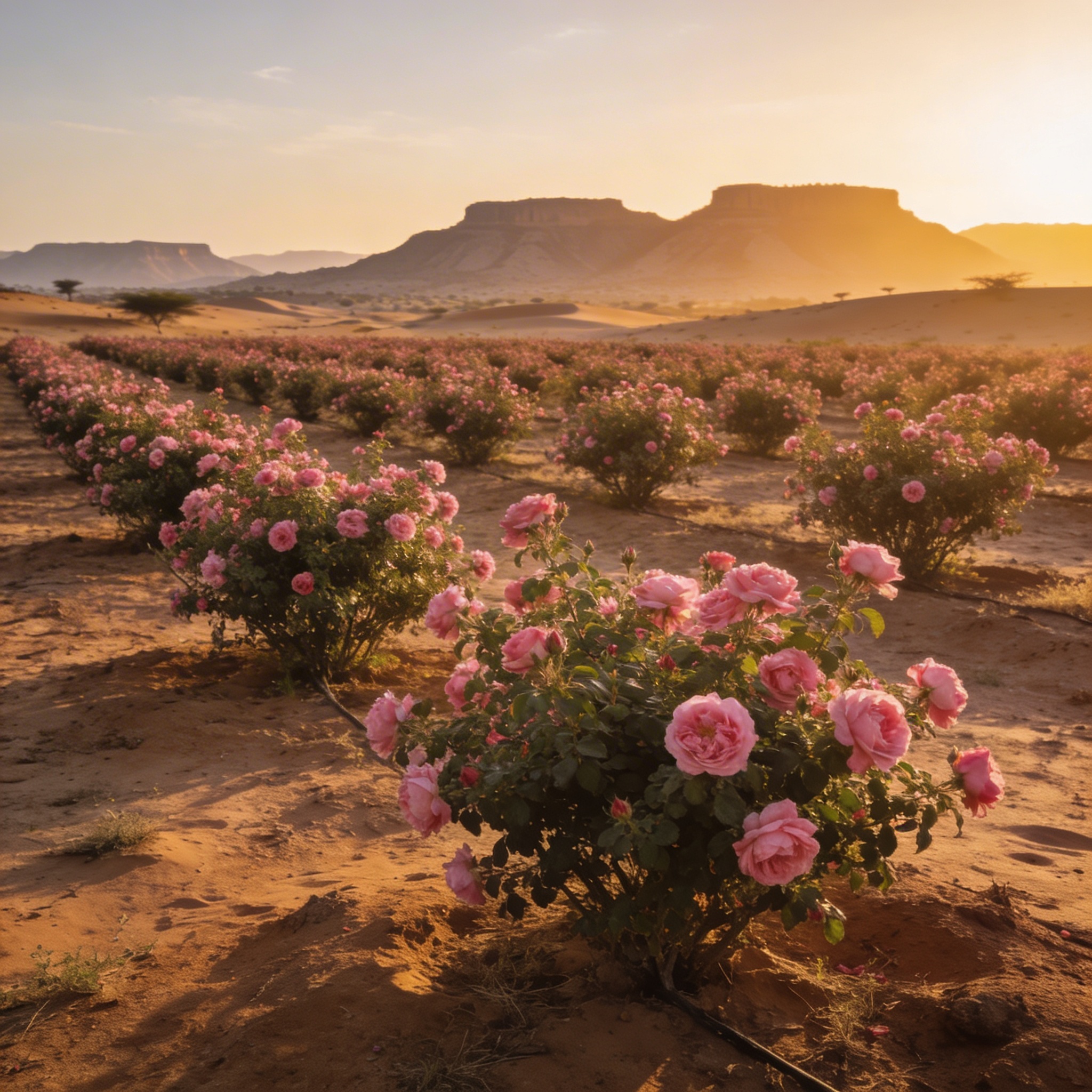
The alkaline desert soil of Pushkar produces a rose that is smaller, more intensely fragrant, and richer in essential oils than any Damascena grown in Turkey or Bulgaria. The harvest runs eight weeks from February to April. Every flower is picked before dawn, when the oil concentration peaks.
Shadow-drying happens the same day. The petals are spread on bamboo racks in ventilated rooms where the temperature never exceeds 35 degrees. Within four days, the moisture is gone but the colour and fragrance remain. A sun-dried rose is brown. Ours is still pink.
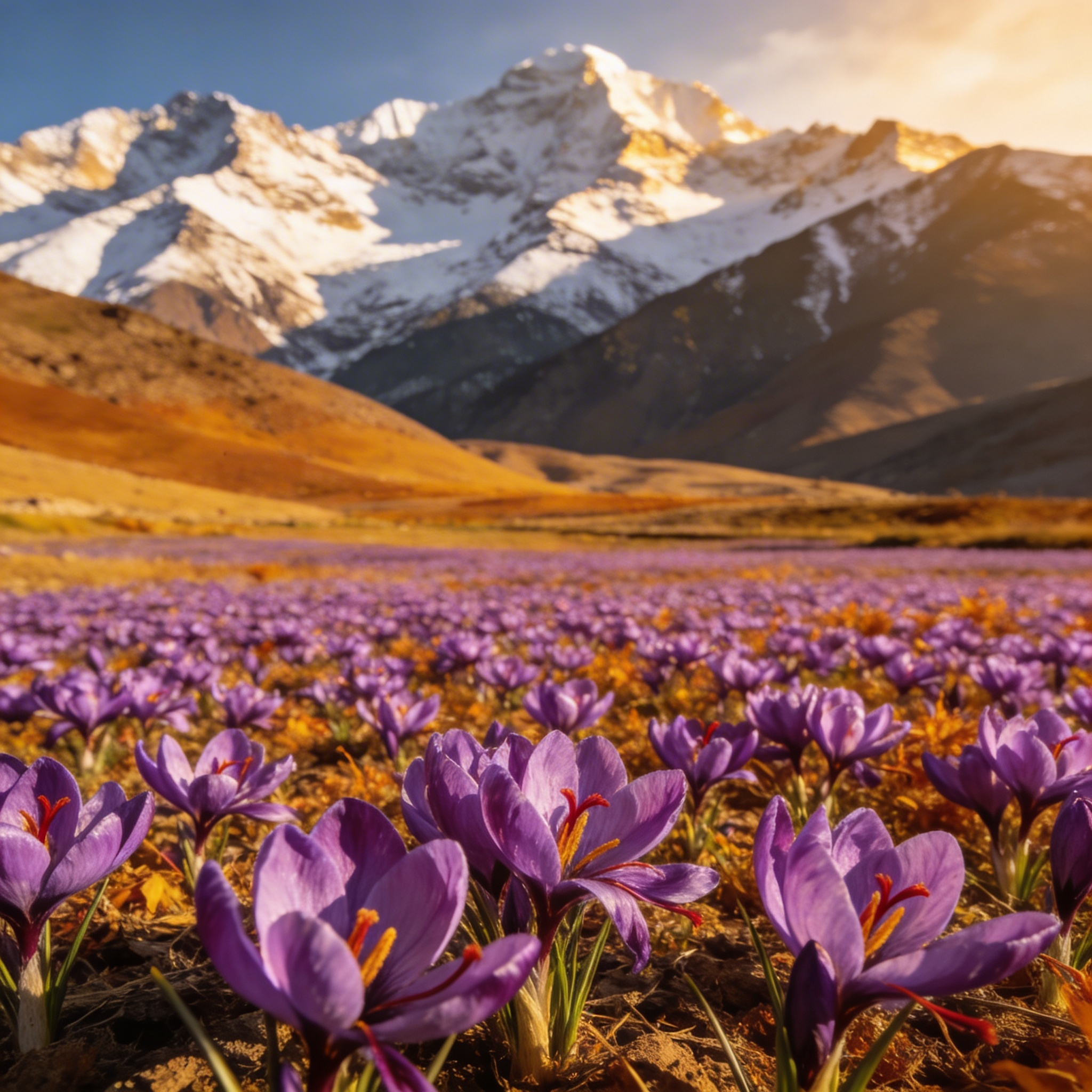
The Karewa plateau sits at 1,600 metres. The soil is a unique combination of clay and organic matter deposited by ancient lakes. Saffron has grown here for over two thousand years — and nowhere else in India has been able to replicate it.
The harvest lasts exactly two weeks in October. Each flower produces three crimson stigmas. Each stigma is picked by hand at dawn, before the sun can degrade the crocin that gives saffron its colour and the safranal that gives it aroma. One gram requires 150 flowers. This is why it costs what it costs.
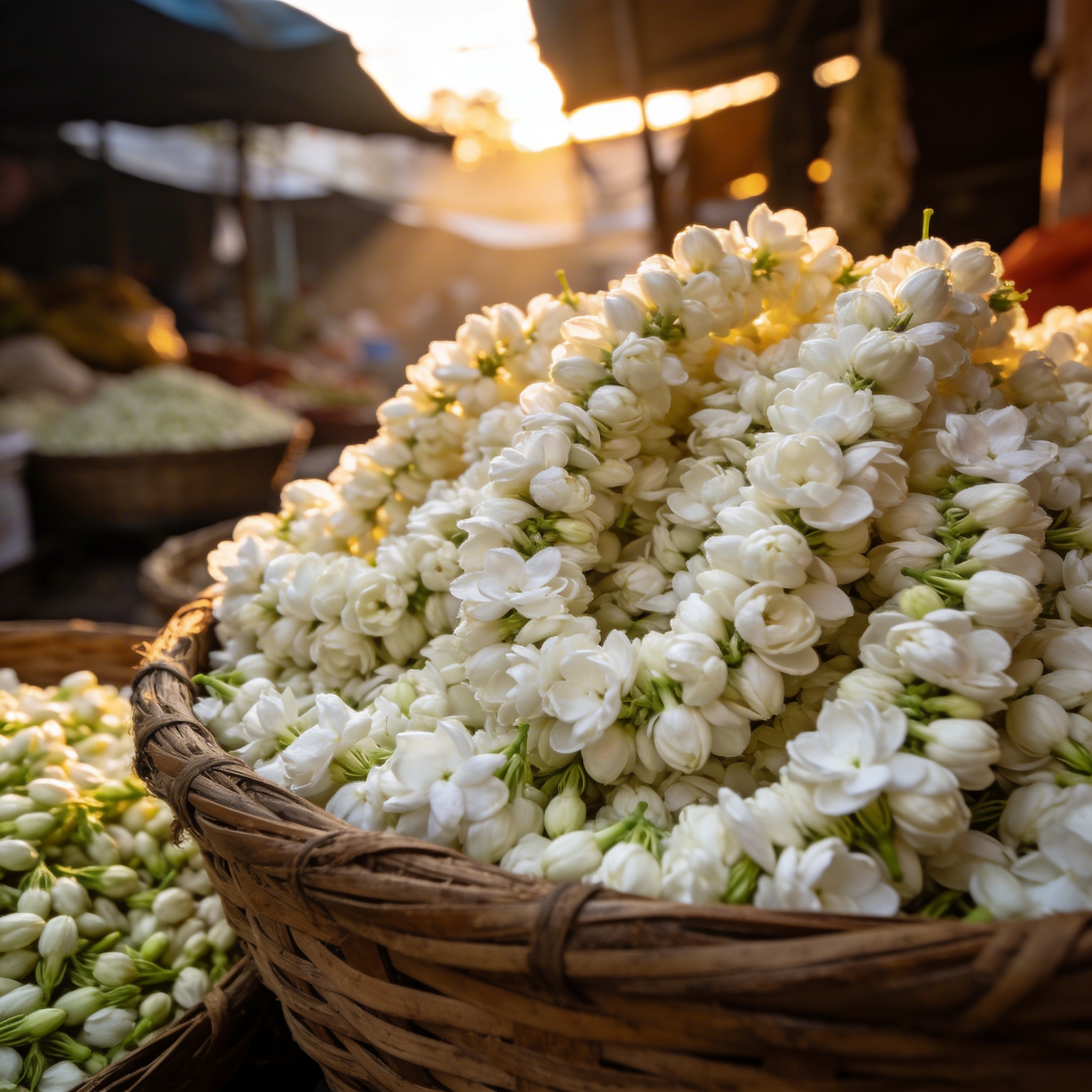
Madurai is the jasmine capital of India. The flower market opens at 3 AM and by dawn the entire city smells of jasmine. Temple gardens have cultivated Jasminum sambac here for centuries — the same variety, the same soil, the same irrigation from the Vaigai river.
Jasmine must be harvested at dawn, when the buds are still closed. An open jasmine flower has already released half its fragrance into the air. We buy closed buds and dry them the same morning. When you steep our jasmine, the bud opens in the water and releases the aroma that Madurai smells at 4 AM.
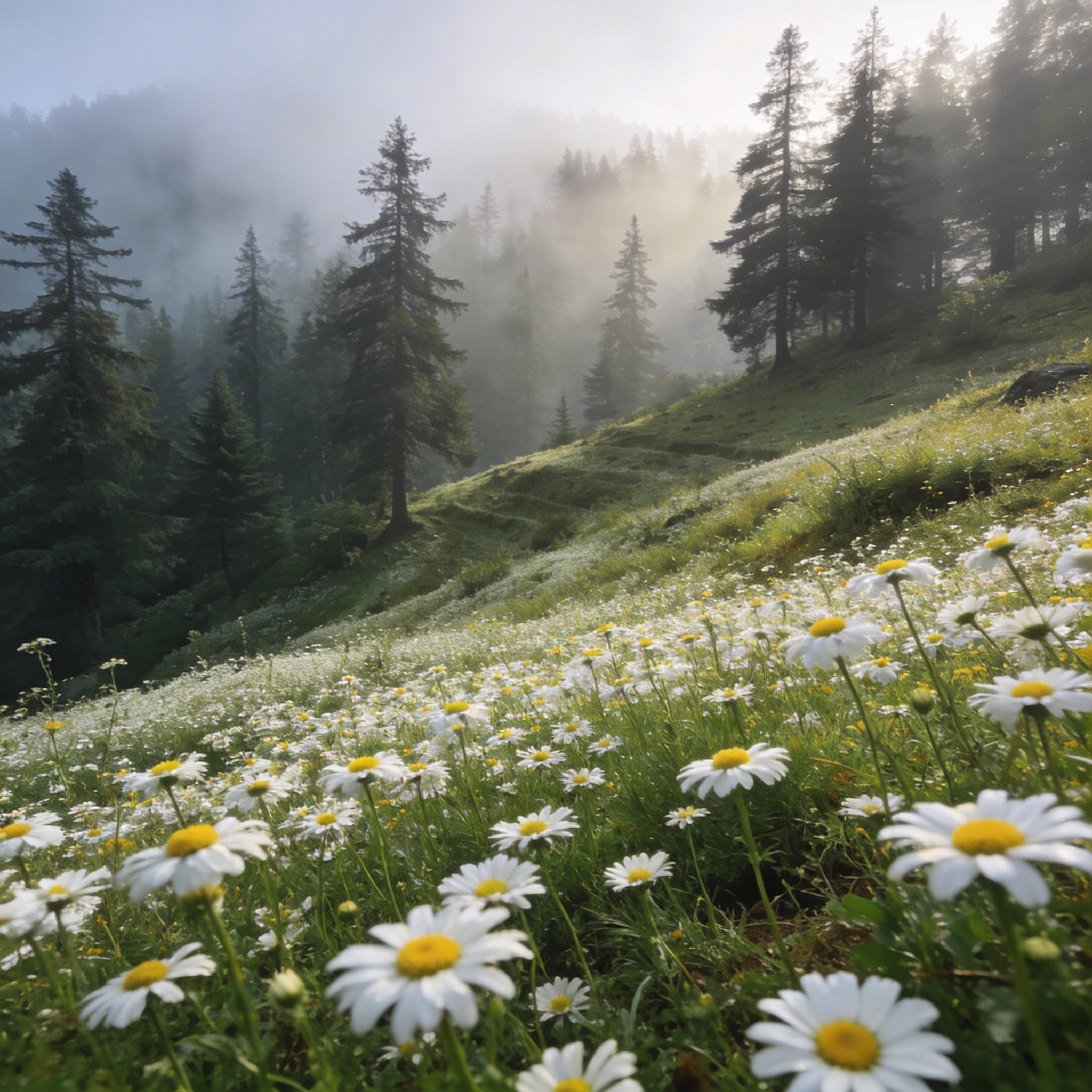
Wild Himalayan chamomile grows at elevations between 1,500 and 3,000 metres, where the air is thin, the soil is rocky, and the plant produces more essential oils to protect itself from UV radiation. This is not the same chamomile that grows in European lowlands.
The flowers are smaller, more concentrated, and significantly more aromatic. They are hand-picked by local farming families during a six-week window in summer. No pesticides — the altitude and cold winters eliminate most pests naturally.
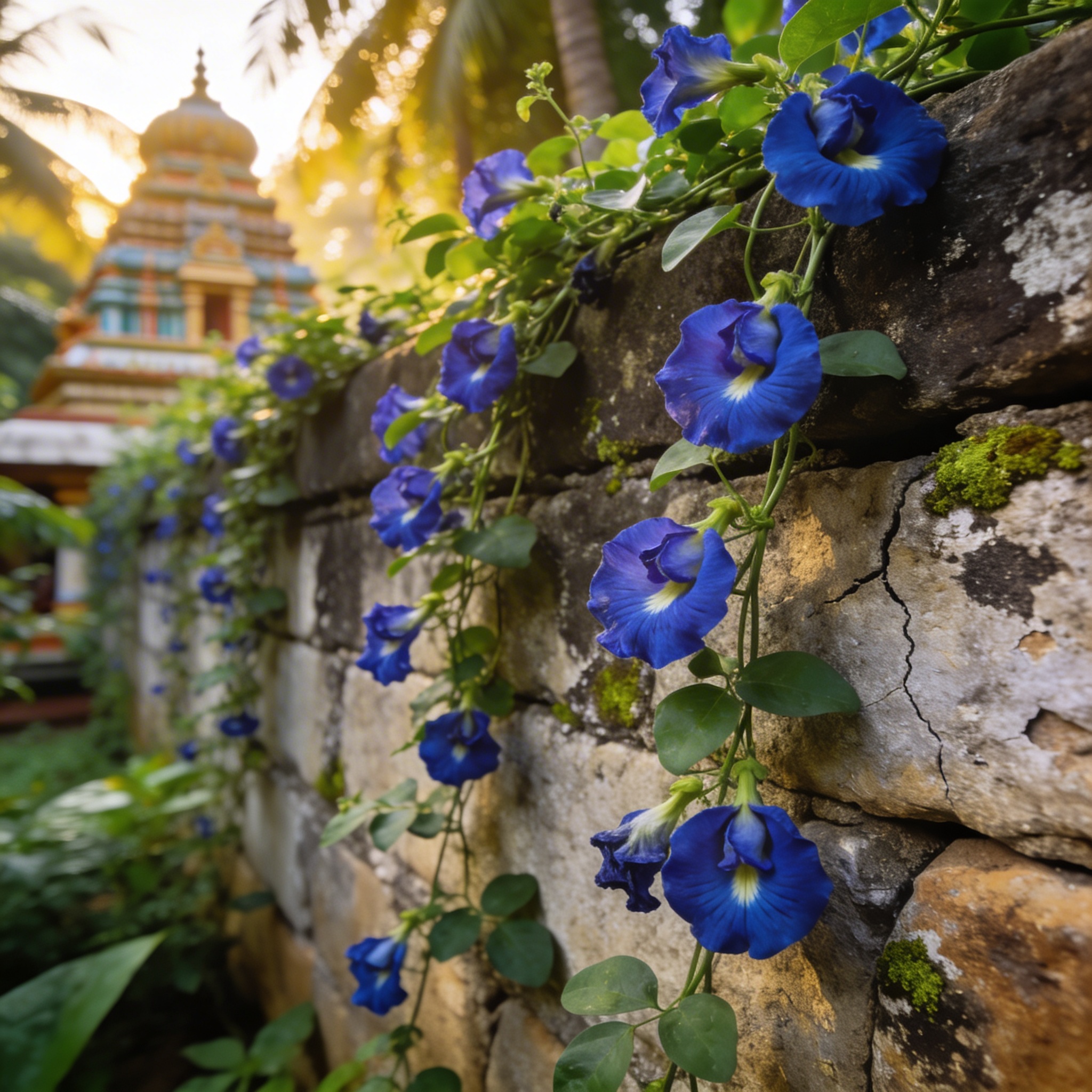
Butterfly pea grows on temple garden walls and along village fences across Tamil Nadu and Kerala. It is not a crop that requires farming — it is a vine that requires respect. The deep blue flowers are picked in the morning when the anthocyanin concentration is highest.
These anthocyanins are what turn water indigo. They are also what make butterfly pea one of the most potent natural antioxidants available. Our drying process preserves the blue so completely that a single flower will still turn an entire cup of water indigo six months after harvest.